
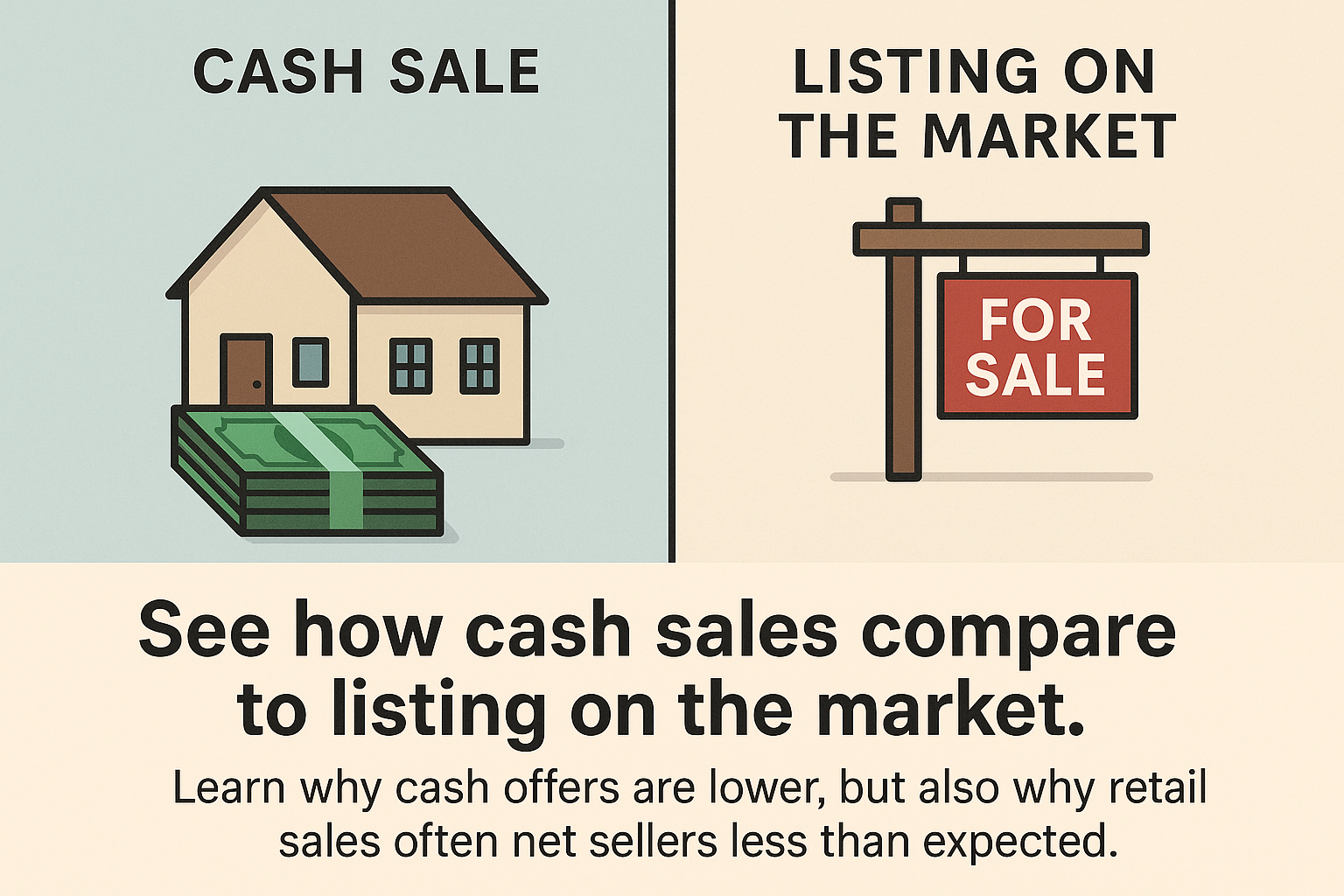
When most people think about selling their house, they picture listing it on the market, waiting for a retail buyer, and walking away with the price they saw on Zillow.
In reality, no matter how you sell, the number you take home is usually less than expected. With a cash sale, the difference is that you know exactly what you’ll walk with — no surprises, no repairs, and no months of waiting.
What Does a Cash Sale Mean?
A cash sale is simple: an investor or buyer pays you directly with their own funds. No banks, no mortgages, no waiting. Closings often happen in as little as 7–14 days.
Benefits for sellers include:
- Speed: Close on your timeline, often in weeks.
- Simplicity: No showings, open houses, or repairs.
- Certainty: Cash buyers don’t back out over inspections or financing.
- No Commissions or Hidden Fees: You avoid the typical 6% agent commission and many other costs.
Cash Sale vs. Listing on the Market
Here’s the reality: every way of selling comes with costs.
| Cash Sale | Traditional Listing | |
|---|---|---|
| Timeline | 7–21 days | 2–6 months (average) |
| Repairs/Updates | $0 (sold as-is) | $10k–$50k+ (depends on house) |
| Showings/Open Houses | None | Multiple |
| Commissions | $0 | 5–6% of sale price |
| Concessions (buyer credits, closing costs) | $0 | 2–5% of sale price |
| Certainty | Guaranteed (if you accept) | Only if buyer financing closes |
Why Cash Offers Are Lower
Cash buyers aren’t paying retail. They’re taking the property as-is, covering your closing costs, and accepting the risks of repairs, holding expenses, and resale.
Here’s the basic formula most investors use:
- Start With After-Repair Value (ARV): What the house would be worth fully fixed.
- Subtract Repairs: All renovations needed, often more than sellers expect.
- Subtract Holding/Resale Costs: Taxes, insurance, utilities, and realtor fees when it’s re-sold.
- Subtract Profit Margin: A reasonable amount for the risk and effort.
Example
If your home would be worth $200,000 fixed up:
- Repairs: $40,000
- Holding/Resale Costs: $20,000
- Profit Margin: $20,000
= Cash Offer: $120,000
What Sellers Often Overlook
When you sell on the market, you also walk away with less than retail value:
- Agent Commissions: 5–6% gone immediately.
- Concessions & Credits: Buyers often ask for 2–5% in closing costs or credits.
- Repairs & Inspections: Negotiations after inspection can cost thousands.
- Time on Market: Every extra month costs you in taxes, insurance, and upkeep.
- Uncertainty: If financing falls through, you start all over again.
So while a retail sale may produce a higher gross price, what actually hits your pocket after months of effort is often not as far off from a fair cash offer as it first seems.
Who Cash Sales Work Best For
- Sellers who need to move quickly (job relocation, foreclosure, inheritance).
- Owners who don’t want to make repairs or updates.
- Anyone who values speed, certainty, and simplicity over holding out for the highest possible number.
Who Cash Sales May Not Be Best For
- Sellers who have time, money, and energy to fix up a home and wait for the perfect retail buyer.
- Homeowners whose top priority is maximizing price, no matter how long it takes.
The Bottom Line
No matter how you sell, the number you walk away with will be less than the sticker price. The question is: which process fits your situation best?
- If you want maximum speed and certainty with no repairs, commissions, or surprises — a cash sale may be the right fit.
- If you’re willing to wait, spend money on repairs, and pay commissions, listing might make sense.
At Providence House Buyers, we’re upfront about how our numbers work. Our cash offers are based on real math, not guesswork — and we make the process simple, fair, and transparent.
Recent Comments